In the corridors where money and power meet, integrity is not a soft virtue to be admired from a distance. It is the hardest risk control an institution owns, and the one asset that outlives us.
Much of my working life is spent thinking about what can go wrong and/or how it can be done better in a safe way. That is the quiet vocation of a risk officer: to sit in the room where decisions are made, to ask the unpopular question, to imagine the failure before it arrives and to price the danger no one else wants to name.
Over the years, that work has taught me a humbling truth. The largest risks a financial institution faces are rarely the ones on the spreadsheet. They do not live in the market data or the credit models. They live in character, in the integrity, or the absence of it, of the people who hold power.
It is a theme as old as commerce itself, and I want to borrow a very old story to make the point. It comes from the Jewish Scriptures (the Bible), though its lesson belongs to everyone; read it, if you prefer, simply as wisdom literature that has lasted because it is true.
A man dies in debt. In life, he had been a respected member of his profession, known to his principal and trusted in his calling. In that age, debt did not end at the graveside, so his creditor moves to seize his two sons as bonded servants. The widow has nothing left to pledge except her husband’s name, so she carries that name to his former master, the prophet Elisha, and reminds him simply that her husband had been a man of integrity. That reputation alone is enough. Elisha tells her to gather every empty vessel she can borrow and to pour out the little oil she has. The oil does not stop until the last jar is full. She sells it, clears the debt, and lives with her sons on what remains.
It is a story remembered for many things, but rarely for the lesson that matters most to those of us in finance. The only collateral that widow could offer was her husband’s integrity, and it proved to be the one asset the creditor could not seize; the one that, once pledged, quietly settled a debt and secured the next generation. Strip away the miracle and a hard commercial fact remains. Character is an asset. It sits on a balance sheet no auditor can see, and it pays.
The corridors where risk really lives
The uncomfortable part is where that asset is most often squandered. In my experience, and in the data, the gravest integrity risks rarely come from the branch teller or the junior analyst. They come from the top. In its 2024 global study of 1,921 fraud cases across 138 countries, the Association of Certified Fraud Examiners (ACFE) found a blunt correlation: the more senior the perpetrator, the larger the loss. It found, too, that close to half of all cases trace to a plain absence of internal controls or, more tellingly, to the override of those controls by the very people meant to enforce them. That is the whole point in a single sentence.
The danger is greatest precisely in the corridors of power, where those who hold the keys can also switch off the alarm. The man in the old story held standing and trust, and used them honestly. The modern cautionary tale is the executive who uses the same standing to suspend the rules built to check him.
The price of a broken jar
Warren Buffett put the arithmetic of reputation as plainly as anyone: “It takes 20 years to build a reputation and five minutes to ruin it.” The global industry has paid dearly to learn how literally true that is. The Boston Consulting Group estimated that between 2008 and 2016, the world’s banks paid more than 320 billion dollars in fines, for rigging interest-rate and currency benchmarks, for laundering money, and for selling products they knew to be unsound. Those were not failures of strategy or intelligence. The institutions involved were led by some of the most capable people alive. They were failures of integrity, in the corridors of power, and they were ruinously expensive.
The lesson is not a foreign one. In 2024, Nigerian banks lost roughly ₦52 billion to fraud, according to the Nigeria Inter-Bank Settlement System. What should trouble every risk officer is not the headline figure but its anatomy. The Nigeria Deposit Insurance Corporation reports that fraud committed by bank staff climbed steadily between 2021 and 2024, and NIBSS has since identified insider abuse as one of the gravest threats in the system. Insiders are a small share of the culprits. Industry figures for 2025 recorded fewer than one hundred bank employees implicated, against more than ten thousand outsiders. Their damage, however, runs far ahead of their number, because they carry the one thing an outsider must first steal: authorised access.
In the first quarter of 2025 alone, staff-linked fraud cost Nigerian banks ₦3.3 billion, a rise of more than 130 percent on the previous quarter, even as the number of such cases fell. The pattern is unmistakable. Fewer hands, heavier losses, and the hands belong to people the institution had trusted.
When trust is the product you sell, and for a bank it is finally the only product you sell, an integrity failure is not a dent in the merchandise but the destruction of it. The ACFE estimates that the typical organisation loses about five percent of its revenue to fraud each year. For a bank, the true cost runs higher because the losses you can count are never the whole bill. The reputation you forfeit is the part that never fits in a ledger.
The slowest asset to build
The deeper message of that old story, I should stress, is not fear. It is hope. Trust, once painstakingly rebuilt, compounds and keeps flowing. Consider that the 2026 Edelman Trust Barometer placed trust in financial services at 63 percent worldwide, up ten points over five years, the only sector to record double-digit gains in that period, with banking the most trusted part of the field. That recovery did not come from clever marketing. It is the return on a decade in which institutions, chastened, largely chose to do the right thing. Integrity is the slowest asset to build and the fastest to lose, which is precisely why it is the most valuable thing we hold.
Making integrity institutional
This is where the risk profession earns its keep. Individual virtue is necessary, but it is fragile, and the man in the story died. The work of risk management is to make integrity institutional: to build systems that make the honest choice the path of least resistance, and that keep working long after any one person has gone. A culture and a control environment, in other words, that outlive their authors.
The tools are well established. The Financial Stability Board, in its work on risk culture, names the first indicator of a sound one as the tone from the top. The three-lines-of-defence model exists for a single reason, so that no one, however senior, sits beyond challenge.
The most powerful early-warning system any institution owns is a workforce that feels safe to speak up. In the ACFE data, a tip exposes more fraud than any other method, accounting for roughly 43 percent of detections, more than internal audit and management review combined. Controls without character are only paperwork; character without controls is only luck. Risk management is the disciplined marriage of the two, and its highest form is a culture in which integrity does not depend on who happens to be watching.
A word to three generations
The old story spoke to three, so let me do the same. To the professional, the man or woman who sits where money and power meet, your integrity is your real balance sheet. Title and rank are borrowed things, handed to someone else soon enough. Reputation is the only holding that is truly yours, and you add to it, or draw it down, in every decision no one will ever see. The question to carry into the office each morning is a simple one: what am I storing up?
To the women in this industry, still too often asked to prove themselves twice, notice who carries that old story. It is the widow, a person the world had written off, without standing and without means, who acts with clarity and dignity while others would have despaired. She does not trade on falsehood. She moves on the strength of an honest name, and it is enough. Integrity confers a standing that no title can grant and no prejudice can withhold.
To the young, the new professionals now entering our ranks, you will be told sooner than you expect that integrity is a luxury you cannot yet afford, that everyone cuts corners, and that the system rewards the sharp over the straight. Do not believe it. The size of that widow’s provision was set by the number of empty vessels she was willing to gather. Character is the vessel, so bring more than you think you need. Remember, too, that behind every figure on our screens is a family, very often a young one, whose future rests on whether the people in the corridors of power kept faith. We are not guarding balances, we are guarding lives.
In risk, we spend our days accounting for what can be lost. The old story insists on naming what cannot. The man in it left no vault and no portfolio, only a name good enough to move his former principal to act, and honest enough that the help, once given, multiplied. We will be remembered in the same way, not for the deals we closed or the returns we booked, but for whether our word could be trusted when trusting it cost us something. That is the asset no creditor can seize, no market can erase, and no death can end. Building the institutions that keep it alive is the most important risk management any of us will ever do.
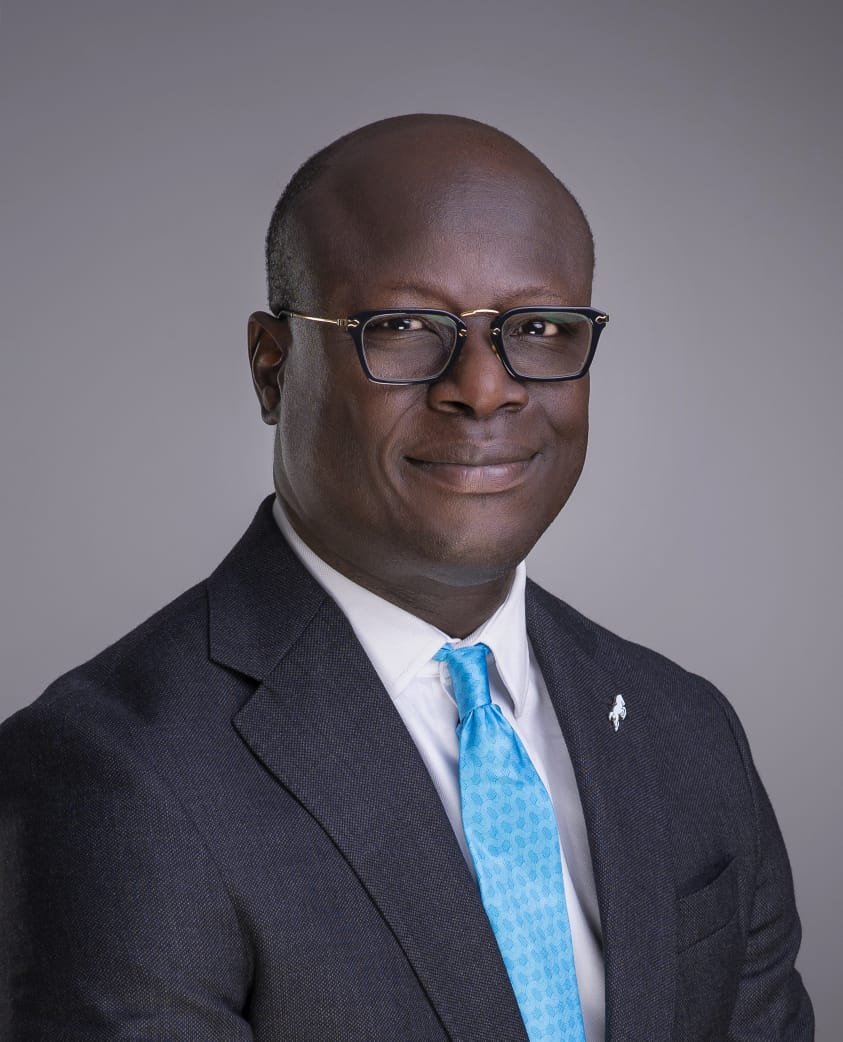
Eyitayo Quadri is the Chief Risk Officer at Union Bank of Nigeria, where he oversees credit, operational and market risk, as well as internal control across the Bank, ensuring robust controls and alignment with regulatory standards. Before joining Union Bank, he worked in various functions in risk management, business strategy and sales at Keystone Bank, Ecobank, Citibank (NIB) and UBA. He holds a BSc in Mathematics from Lagos State University and an MBA in International Finance & Strategy from Bayes Business School (St George’s City, University of London) and completed the Emerging Leader Development Programme at Columbia Business School. He is a chartered risk manager (Chartered Risk Management Institute of Nigeria), chartered banker (Chartered Institute of Bankers of Nigeria) and a respected Thought Leader in risk management.