
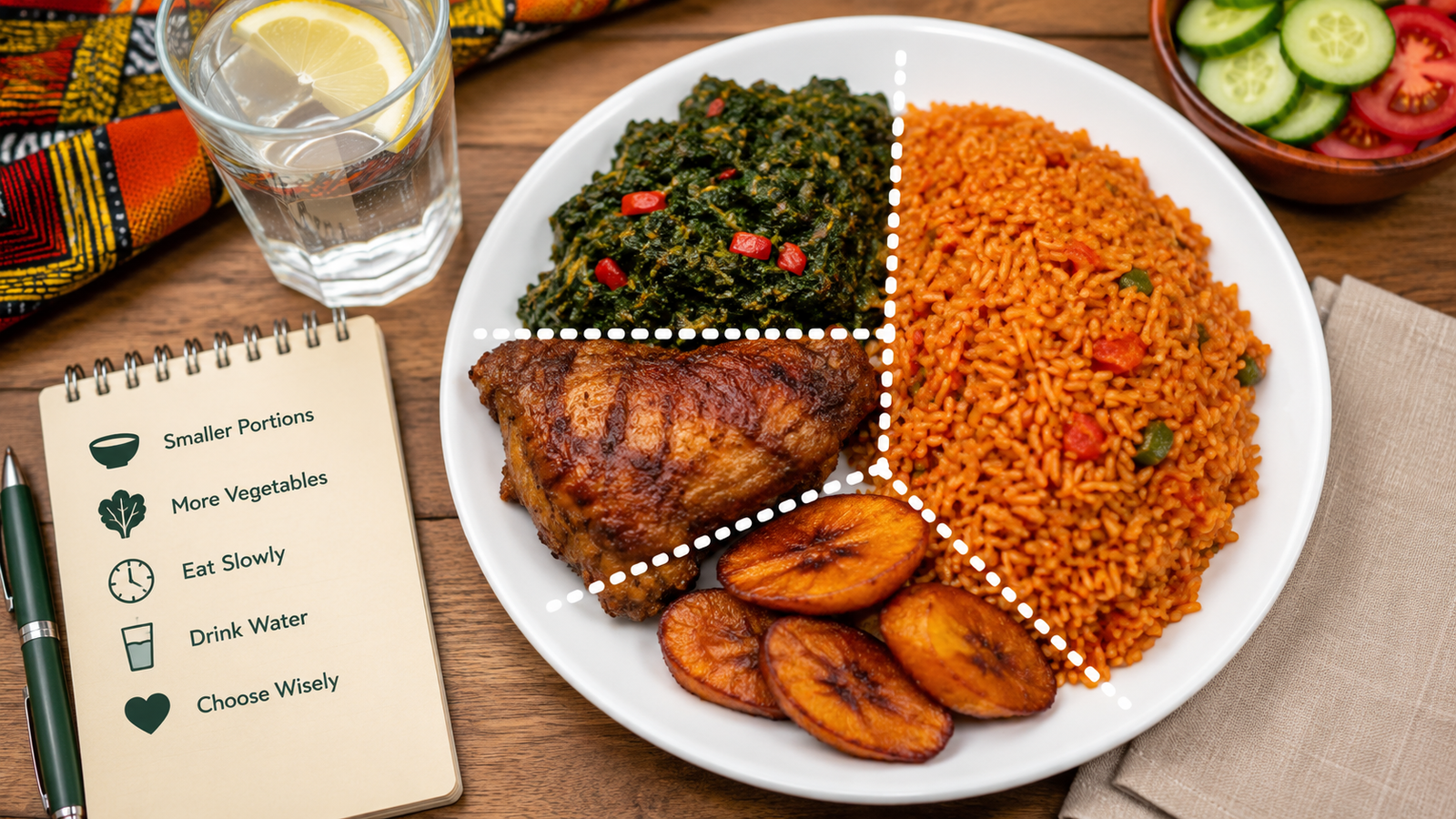
Nigerian cuisine is celebrated for its rich flavours, hearty portions, and comforting meals. From steaming plates of jollof rice to bowls of egusi soup paired with pounded yam, our local dishes are deeply satisfying.
However, enjoying these delicious meals doesn’t have to mean overeating. With a few mindful habits, you can savour your favourite Nigerian foods while maintaining a healthy lifestyle.
Start with Smaller Portions
One of the easiest ways to avoid overeating is to serve yourself a smaller portion first. Instead of filling your plate to the brim, begin with a moderate serving. If you’re still genuinely hungry after eating slowly, you can always have a little more.
Fill Half Your Plate with Vegetables
Adding more vegetables to your meals increases fiber intake, helping you feel full for longer. Pair your rice with a generous serving of steamed vegetables or enjoy soups loaded with ugu, spinach, water leaf, or bitter leaf. This simple trick reduces the temptation to overeat starchy foods.
Be Mindful of Swallow Portions
Swallows such as pounded yam, eba, amala, semovita, and fufu are staples in many Nigerian homes, but it’s easy to consume more than necessary. Instead of taking large wraps, make smaller balls and enjoy them slowly with plenty of soup and vegetables.
Eat Slowly and Enjoy Every Bite
Your brain needs about 20 minutes to recognize that you’re full. Eating too quickly often leads to overeating before your body has a chance to signal satisfaction. Slow down, chew your food properly, and appreciate the flavors and textures of your meal.
Choose Lean Protein
Include healthy protein sources such as grilled fish, skinless chicken, turkey, beans, eggs, or lean beef. Protein helps keep you satisfied longer, reducing the urge to snack soon after eating.
Watch Your Cooking Oil
Many Nigerian dishes rely on palm oil or vegetable oil for flavour, but using too much can significantly increase calories. You don’t have to eliminate oil entirely; simply use it in moderation while preserving the rich taste of your meals.
Drink Water Before Meals
A glass of water about 20 to 30 minutes before eating can help reduce excessive hunger and encourage more mindful eating. Sometimes thirst is mistaken for hunger, leading to unnecessary snacking.
Limit Sugary Drinks
Soft drinks, sweetened juices, and sugary beverages add calories without making you feel full. Choose water, unsweetened zobo, or fresh fruit-infused water instead. If you enjoy fruit juice, opt for freshly made ones without added sugar and drink them in moderation.
Don’t Skip Meals
Skipping breakfast or lunch often results in overeating later in the day. Eating balanced meals at regular intervals helps regulate your appetite and keeps your energy levels steady.
Listen to Your Body
The goal isn’t to avoid your favorite Nigerian dishes—it’s to enjoy them wisely. Learn to recognize the difference between physical hunger and eating out of boredom, stress, or habit. Stop eating when you feel comfortably satisfied rather than completely full.
Finally, healthy eating isn’t about giving up jollof rice, pounded yam, or your favourite soups. It’s about balance, moderation, and making smarter choices. By practicing portion control, adding more vegetables, eating slowly, and paying attention to your body’s hunger signals, you can continue enjoying the incredible flavours of Nigerian cuisine without overeating.
Remember, good nutrition isn’t about restriction—it’s about creating habits you can maintain for a lifetime, one balanced plate at a time.