
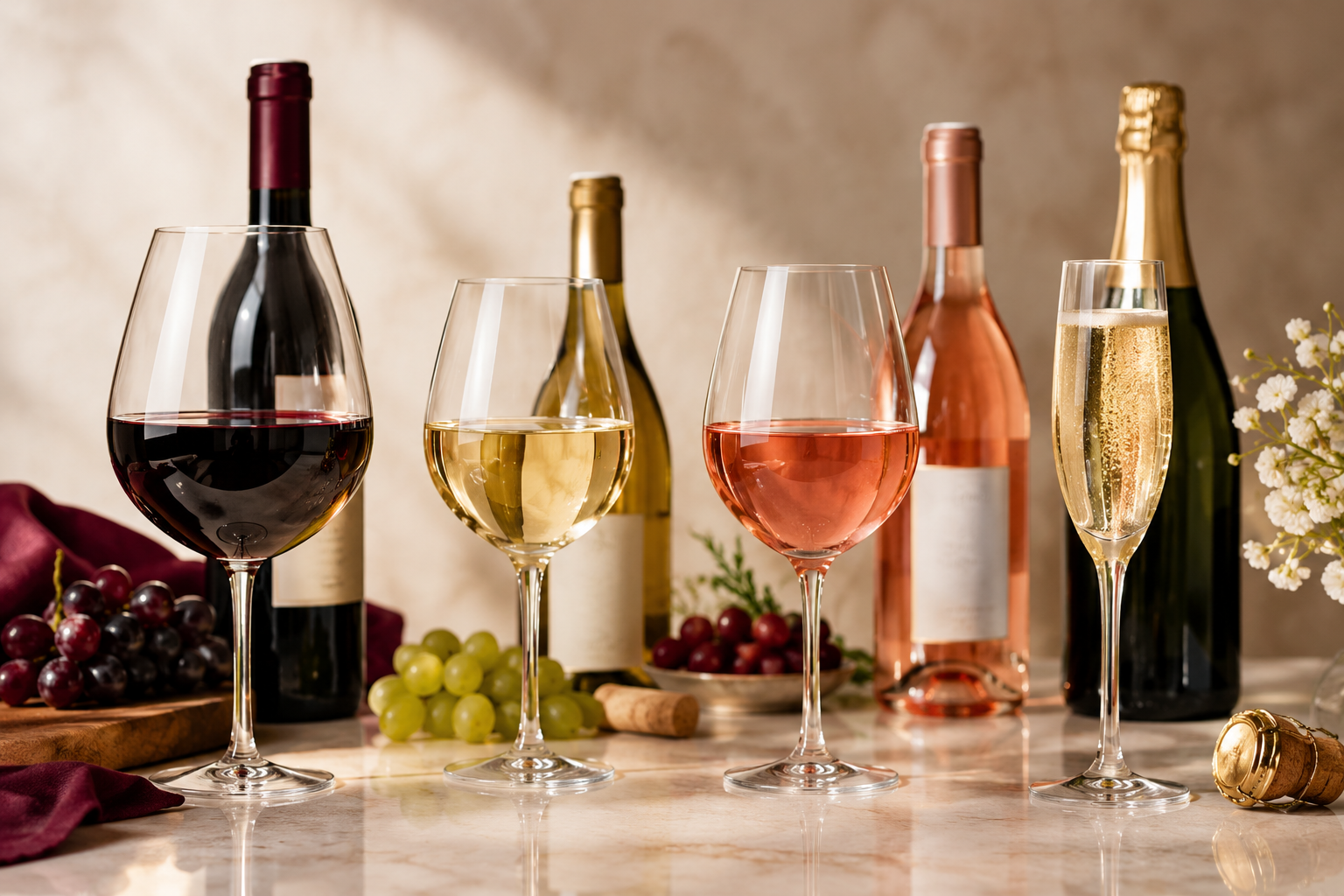
Wine comes in different colours, styles and flavours, and understanding the differences can make choosing a bottle for a dinner, celebration, or special occasion much easier.
For beginners, the world of wine can seem complicated. From bold red wines to refreshing whites, delicate rosés, and bubbly sparkling varieties, each type offers a different experience.
The good news is you don’t need to be a wine expert to understand the basics. Knowing how these four main wine styles differ is a practical starting point.
1. Red Wine: Rich, Bold and Full of Character
Red wine is made from dark-coloured grapes, with the grape skins generally remaining in contact with the juice during fermentation. This process gives red wine its characteristic colour and contributes to its flavour, structure and tannins.
Depending on the grape variety and production method, red wine can taste fruity, spicy, earthy or woody.
Some red wines are light and smooth, while others are fuller-bodied with more intense flavours.
Common red wine varieties include:
- Cabernet Sauvignon: Often full-bodied, with flavours associated with dark fruits and noticeable tannins.
- Merlot: Frequently softer and fruit-forward, with plum and berry notes.
- Pinot Noir: Typically lighter-bodied, with red-fruit flavours and a more delicate character.
- Shiraz or Syrah: Often associated with dark fruits, spice and a fuller flavour profile.
When is red wine suitable?
Red wine is often served with grilled meats, rich sauces, roasted vegetables, and hearty meals. It can also be an option for dinner parties, anniversaries, and formal gatherings.
2. White Wine: Fresh, Crisp, and Versatile
White wine is generally produced from white grapes or from dark-skinned grapes processed with little skin contact, resulting in a lighter-coloured wine.
White wines vary considerably. Some are crisp and refreshing, while others are rounded, creamy or aromatic.
Common white wine varieties include:
- Chardonnay: Can range from fresh and citrusy to rich and creamy, depending on how it is produced.
- Sauvignon Blanc: Often crisp and aromatic, with citrus, green-fruit or herbal notes.
- Riesling: Can range from dry to sweet, frequently with refreshing acidity and fruity aromas.
- Pinot Grigio or Pinot Gris: Often light and fresh, although the style varies by region and producer.
When is white wine suitable?
White wine is commonly paired with fish, seafood, chicken, salads, and lighter dishes. It can also be an appealing option for outdoor gatherings, lunches, and warm-weather entertaining.
3. Rosé Wine: A Fresh and Colourful Middle Ground
Rosé wine is known for its pink colour, which can range from pale salmon to vibrant pink.
It is usually produced from red grapes using a winemaking process that limits the amount of time the grape skins remain in contact with the juice. The shorter contact period helps produce the wine’s lighter colour.
Rosé is not simply a mixture of red and white wine. Most rosé wines are made using dedicated rosé production methods.
Its taste depends on the grapes and winemaking style. Some rosés are dry and crisp, while others are fruitier or noticeably sweet.
What does rosé taste like?
Common flavour impressions include strawberry, raspberry, watermelon, citrus and other red-fruit notes.
When is rosé wine suitable?
Rosé works well for brunches, picnics, garden parties, casual dinners, and celebrations. Its versatility also makes it worth considering when a group has different food preferences.
4. Sparkling Wine: Bubbles for Special Moments
Sparkling wine is distinguished by its bubbles, which come from dissolved carbon dioxide. These bubbles are produced through different winemaking methods, depending on the style.
Sparkling wines can be dry, off-dry or sweet, and their flavours can range from fresh citrus and green apple to richer notes of bread, pastry and nuts.
Popular sparkling wine styles include:
- Champagne: Sparkling wine produced in France’s Champagne region under specific production rules.
- Prosecco: An Italian sparkling wine commonly associated with fresh fruit flavours and lively bubbles.
- Cava: A Spanish sparkling wine made under defined production requirements.
- Other sparkling wines: Produced in many countries using a variety of grapes and methods.
Champagne is therefore one specific type of sparkling wine, rather than a general name for every bubbly wine.
When is sparkling wine suitable?
Sparkling wine is a popular choice for weddings, birthdays, anniversaries, graduations, festive occasions, and other celebrations. Some styles also work well as an aperitif or alongside appetisers.
Red vs White vs Rosé vs Sparkling Wine: What’s the Difference?
| Wine type | Typical characteristics | Occasions and food |
|---|---|---|
| Red | Often darker, with flavours ranging from light and fruity to bold and tannic | Grilled meats, hearty meals, and dinner parties |
| White | Often crisp, citrusy, aromatic or creamy | Seafood, poultry, salads, and lighter meals |
| Rosé | Pink in colour, with styles ranging from dry to sweet | Brunches, picnics, casual dinners, and celebrations |
| Sparkling | Bubbly, with varying levels of dryness and sweetness | Toasts, weddings, parties, and appetizers |
These are general guidelines rather than strict rules. The grape variety, region, production method, and individual bottle can make a considerable difference.
How to Choose the Right Wine as a Beginner
If you are buying wine for the first time, start by thinking about the occasion, the food, and your personal preferences.
Consider your preferred taste. If you enjoy rich, intense flavours, you might explore some red wines. If you prefer freshness and citrus notes, certain white wines may suit you. Rosé offers a broad range of fruit-forward styles, while sparkling wine adds bubbles to the experience.
Think about the food. Wine pairing can enhance a meal, but you do not need to follow rigid rules. Matching the intensity of the food and wine is a useful starting point.
Check the sweetness level. Red and white wines can be dry, while rosé and sparkling wines can also range from dry to sweet. Do not assume that colour alone determines sweetness.
Consider the occasion. A relaxed lunch, formal dinner, wedding reception, and birthday celebration may call for different choices.
Ask for assistance. If you are unsure, ask a knowledgeable retailer or wine professional to suggest options within your budget.
Red, white, rosé and sparkling wines each offer different styles, flavours and experiences. Understanding their basic differences makes it easier to explore wine without feeling overwhelmed by unfamiliar terminology.
You do not need to know every grape variety or winemaking technique before choosing a bottle. Start with the styles that interest you, pay attention to what you enjoy, and build your knowledge gradually.
Whether you are selecting a bottle for a dinner party, choosing a gift or planning a special celebration, a little understanding can make the experience more enjoyable.