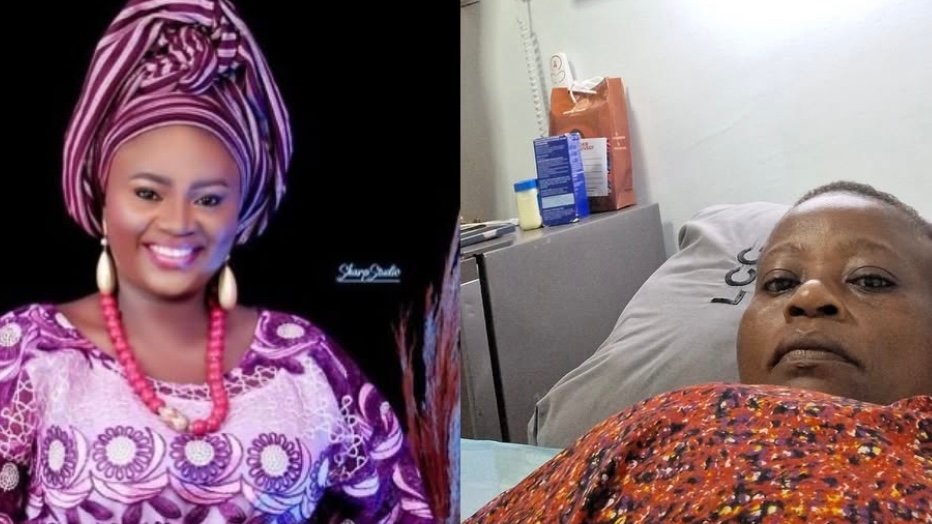
The online community and advocates for cancer awareness have been thrown into mourning following the passing of a popular patient known affectionately as ‘AuntieEsther.’
Her death, which occurred over the weekend following a prolonged battle with the disease, has sparked a poignant national conversation on the intersection of religious conviction and medical necessity. Despite urgent pleas from medical professionals, AuntieEsther reportedly opted to decline a critical blood transfusion, choosing instead to rely on faith-based healing and prayer in her final days as a Jehovah’s Witness—a decision that has highlighted the complex and often tragic tension between deep-seated spiritual beliefs and life-saving clinical interventions.
Her passing was confirmed Saturday by media personality #AUNTYMUSE_, who had supported her throughout her medical journey. Responding to news of the death shared by X user Tabuko, #AUNTYMUSE_ wrote, “May her soul rest in peace.”
AuntieEsther’s case had drawn national attention after she declined a recommended blood transfusion, citing her faith. Her treatment was funded through public donations exceeding ₦30 million, coordinated largely by charity advocate Wisdom Obi-Dickson (#Wizarab10), who reported that ₦30.7 million had been raised by early December.
In previous updates, AuntieEsther shared that her cancer was localized to her breast and armpit areas. While doctors recommended chemotherapy preceded by measures to improve her blood levels, she and her family opted for treatment methods that would avoid transfusion.
“My organs inside fine. Doc say she want to start chemotherapy but I go take injection,” she had written, thanking Nigerians for their support.
The situation generated controversy when Obi-Dickson revealed that church leaders had warned AuntieEsther of potential disfellowship if she accepted blood transfusion. Doctors presented two options: a transfusion-supported treatment within budget, or a costlier, longer alternative without transfusion. She chose the latter.
“Though it will take longer and cost more, we have to respect her religious beliefs,” Obi-Dickson said at the time, though he later expressed frustration with the family and church’s unwavering stance.
#AUNTYMUSE_ emphasized that AuntieEsther’s position on blood transfusion had been clear from the start, and that doctors had indicated the alternative treatment could still be effective.
The case sparked a heated online debate, with some suggesting donated funds should have been redirected if medical advice was being refused, while others defended her right to choose treatment consistent with her deeply held beliefs.
As news of her passing spread, social media platforms were flooded with a mixture of heartbreak, respect, and deep reflection. For many, AuntieEsther wasn’t just a patient; she was a symbol of resilience whose journey had become a daily source of inspiration for thousands.
A Tapestry of Tributes
The outpouring of emotion across X (formerly Twitter) and Facebook highlights the profound impact she had:
@Grace_Foundations: “AuntieEsther fought with a smile that could light up a whole ward. While my heart breaks that she is gone, I respect that she went home on her own terms, holding onto the faith that defined her life. Rest in power, Warrior. 🕊️”
@MedicalVoiceNG: “A tragic day for the cancer advocacy community. We lost a vibrant soul today. This loss reminds us of the difficult conversations we still need to have about healthcare literacy and supporting patients in their most vulnerable moments. She will be missed.”
Lagos Community Page: “She was the ‘Auntie’ to everyone who followed her. She taught us how to find joy in the middle of a storm. Her legacy isn’t just her battle with cancer, but the love she sowed in the hearts of strangers.”