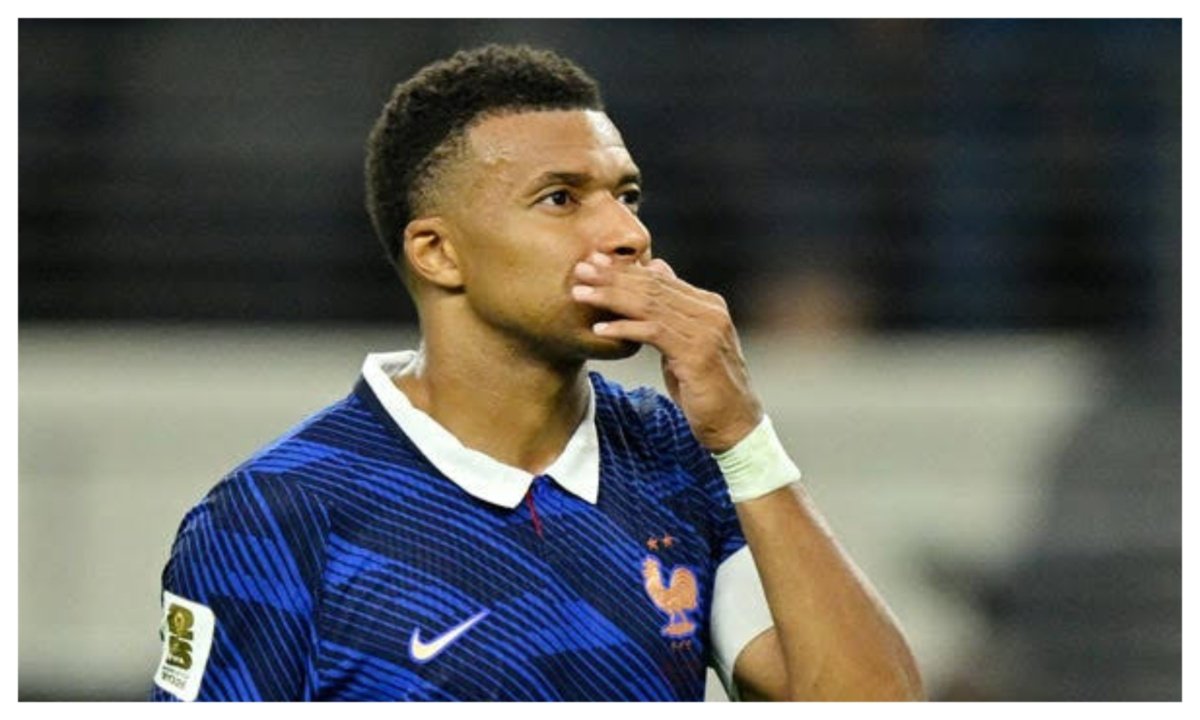
The most historic records broken at the just concluded 2026 FIFA World Cup from Mbappé to Spain has been highlighted
Glamtush reports that the 2026 FIFA World Cup ended on Sunday with Spain lifting the trophy for the second time after defeating Argentina 1-0 in the final.
Beyond the crowning of a new champion, the first-ever 48-team World Cup produced a series of remarkable records, from goalscoring feats to tactical trends, making it one of the most memorable tournaments in the competition’s history.
Here are some of the standout numbers from the tournament, according to FIFA on Wednesday:
Highest goals-per-game average in over five decades.
A total of 308 goals were scored across 104 matches, giving the tournament an average of 2.96 goals per game.
It is the highest goals-per-game average since the 1970 World Cup (2.97), surpassing Qatar 2022 (2.69), Russia 2018 (2.64) and Brazil 2014 (2.67).
The highest average in World Cup history remains Switzerland 1954, which produced 5.38 goals per game.
Record number of prolific scorers.
The expanded tournament witnessed an unprecedented number of players scoring at least six goals.
Six footballers reached that mark:
Kylian Mbappé – 10 goals
Lionel Messi – 8 goals
Jude Bellingham – 7 goals
Erling Haaland – 7 goals
Ousmane Dembélé – 6 goals
Harry Kane – 6 goals
Mbappé breaks multiple World Cup records
France captain Kylian Mbappé finished as the tournament’s leading scorer with 10 goals.
The feat made him the first player to win the FIFA World Cup Golden Boot at two different tournaments after previously finishing as the top scorer at Qatar 2022.
He also became the first player since Germany’s Gerd Müller in 1970 to score 10 goals in a single World Cup.
Only France’s Just Fontaine (13 goals in 1958) and Hungary’s Sándor Kocsis (11 goals in 1954) have scored more in one edition.
Mbappé becomes World Cup’s all-time leading scorer
One of the tournament’s biggest storylines was the battle between Lionel Messi and Kylian Mbappé for the all-time World Cup scoring record.
Messi arrived at the tournament with 13 goals, while Mbappé had 12. Miroslav Klose’s record of 16 initially came under threat as Messi moved to 21 goals during Argentina’s run to the final.
However, Mbappé overtook the Argentine after scoring twice in France’s bronze-medal match against England, finishing the tournament with 22 World Cup goals to become the competition’s all-time leading scorer.
Set pieces remained a major weapon
Dead-ball situations continued to play a decisive role throughout the tournament.
54 goals came from set pieces.
38 originated from corners, free-kicks or long throw-ins.
16 penalties were converted.
Overall, set pieces accounted for 17.5 per cent of all goals scored.
Long-range goals increased significantly
Teams also relied more on shots from outside the penalty area.
A total of 43 goals were scored from long range, including:
Seven direct free-kicks.
Thirty-six goals from open play.
Those strikes represented 14.6 per cent of all goals, almost double the eight per cent recorded at Qatar 2022.
Crosses produced almost one in four goals
Crosses remained one of the tournament’s most effective attacking methods.
A total of 75 goals resulted from crosses, including Ferran Torres’ winning goal for Spain in the final.
Overall, crosses accounted for 24 per cent of all goals scored, excluding deliveries from set pieces.
Real Madrid players scored the most goals.
Among club sides, Real Madrid players topped the goalscoring charts with 22 goals, contributed by:
Kylian Mbappé – 10
Jude Bellingham – 7
Vinícius Júnior – 4
Arda Güler – 1
Paris Saint-Germain finished second with 15 goals, while Arsenal players scored 13.