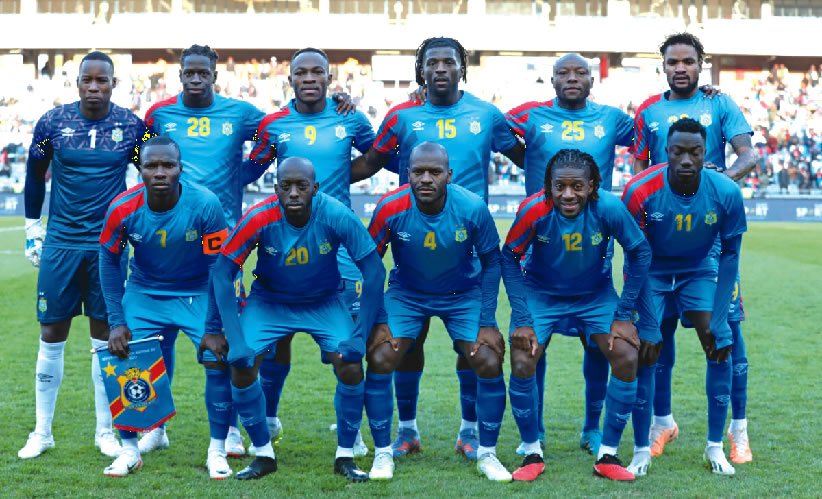
The apex world soccer’s governing body, FIFA, knew that the Democratic Republic of Congo fielded an ineligible player in the 2026 World Cup qualifier game played against the Super Eagles of Nigeria, The New York Times has learnt.
The match, which was held in November 2025 in Rabat, Morocco, was the final of the CAF play-offs for a spot in the intercontinental tournament.
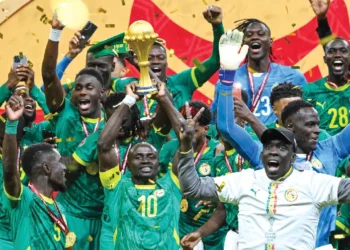
DR Congo won 4-3 on penalties after the match ended 1-1.
According to the report published on Tuesday, FIFA’s own legal officials had privately determined that Congo had breached player eligibility rules after goalkeeper Lionel Mpasi failed to complete the required documentation to switch his international affiliation from France, where he had represented youth teams.
Despite the finding, FIFA allowed Mpasi to continue playing, and Congo went on to defeat Jamaica in March to secure its first World Cup appearance in 52 years.
The development has raised fresh questions over FIFA’s handling of Nigeria’s complaint against Congo, which came after the Central African side defeated the Super Eagles on penalties in the African play-off final in November 2025.
The defeat condemned Nigeria to a second consecutive World Cup miss, after also missing out on the 2022 edition in Qatar.
In December 2025, the Nigeria Football Federation lodged a complaint with FIFA alleging that Congo had fielded players who were not properly eligible to represent the country.
The NFF’s complaint questioned the clearance of several foreign-born players, including Mpasi, and alleged that the Congolese federation had misled FIFA in securing their eligibility.
Documents and correspondence reviewed by The New York Times, alongside information from a senior official directly involved in the case, showed that FIFA officials had considered several possible sanctions against Congo, including awarding the match to Nigeria, imposing fines, replacing Congo with Nigeria in the play-off against Jamaica or taking no action on the grounds that Nigeria had filed its complaint late.
Under FIFA rules, fielding an ineligible player can result in a team forfeiting the match in which the player featured, as FIFA had previously taken a more decisive position in similar cases.
In 2016, FIFA sanctioned Greece after it fielded an ineligible player who had previously represented Australia at youth level, awarding a 3-0 defeat in its match against Turkey. Two years later, the governing body changed the results of two Bolivia World Cup qualifying matches after determining that Bolivia had fielded a player who had previously represented Paraguay.
At the time FIFA was reviewing the Congo eligibility case, Véron Mosengo-Omba, an ally of Infantino, was preparing to contest for the presidency of the Congolese football federation.
Two months later, following Congo’s qualification for the World Cup, Mosengo-Omba emerged as the sole candidate and was elected president after eight other contenders had either withdrawn or been disqualified following changes to eligibility rules.
Cameroonian former FIFA official Prince Zelkifli Rahman Ngoufonja, popularly known as Prince Zul, said the relationship between Infantino and Mosengo-Omba raised questions over the potential consequences of FIFA removing Congo from the World Cup.
“If FIFA removed Congo from the World Cup,” he said, Infantino’s ally’s prospects “could have been damaged.”
Mosengo-Omba, however, said he was unaware of FIFA’s findings regarding Mpasi’s eligibility.
Punch