
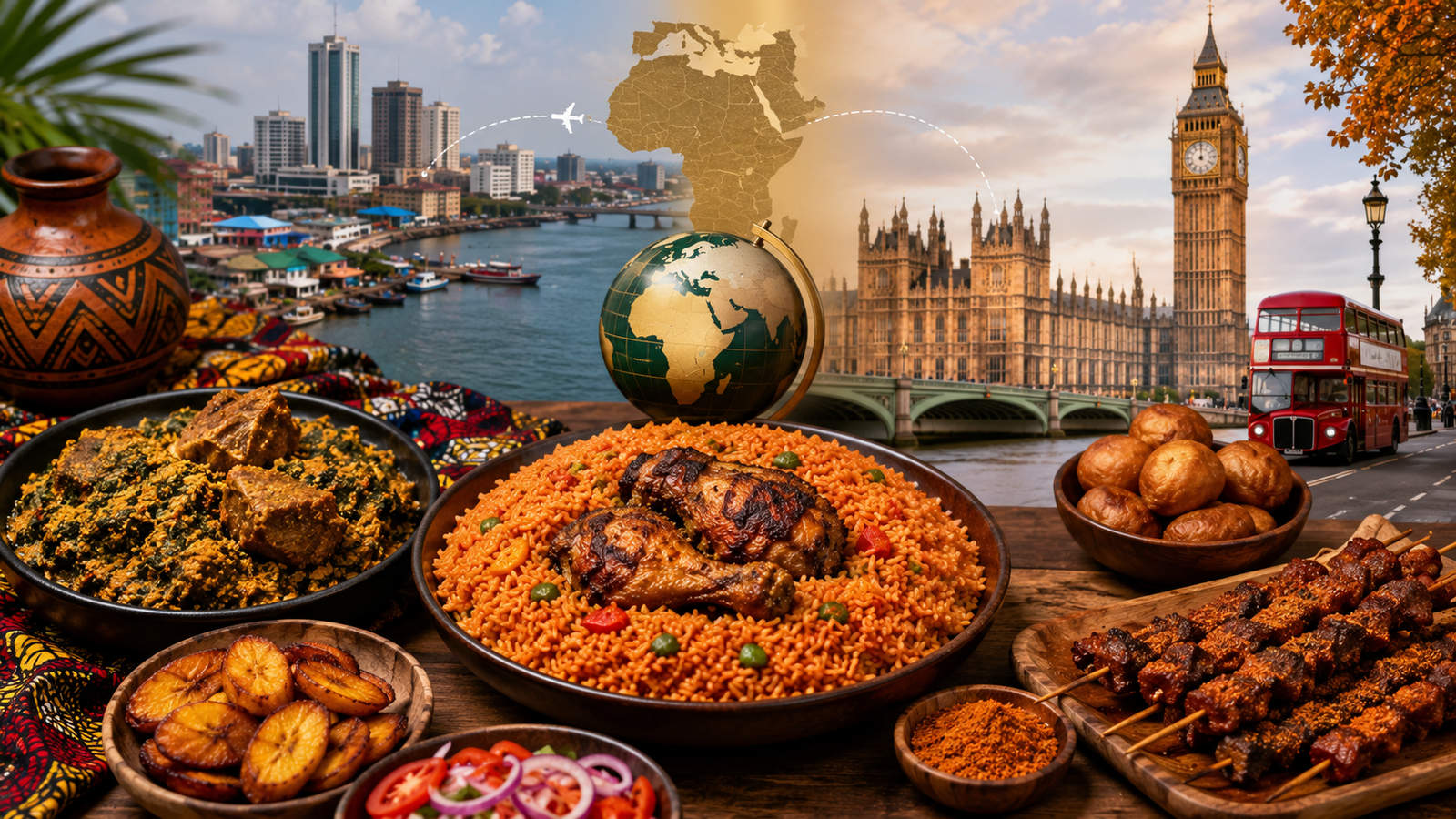
Nigerian cuisine has come a long way from being a cherished local tradition to becoming a global culinary sensation.
Once enjoyed mainly within Nigerian homes and communities abroad, dishes such as jollof rice, suya, egusi soup, moi moi, and puff-puff are now appearing on restaurant menus, food festivals, and social media feeds around the world.
From the bustling streets of Lagos to the vibrant food scene in London, Nigerian food is winning hearts with its bold flavours, rich spices, and cultural heritage.
A Global Appetite for Nigerian Food
Over the past decade, Nigerian cuisine has experienced remarkable international recognition. The growing Nigerian diaspora has introduced authentic local dishes to new audiences, while food lovers eager to explore different cultures have embraced the country’s diverse culinary traditions.
Today, it’s not unusual to find Nigerian restaurants packed with customers from different backgrounds, all eager to experience the unique taste of West Africa.
London: A Hub for Nigerian Cuisine
London has become one of the world’s leading destinations for Nigerian food. Across the city, restaurants, food markets, and catering businesses proudly serve classics like jollof rice, pepper soup, asun, efo riro, and amala with gbegiri.
Many of these establishments have become popular not only among Nigerians living in the UK but also with locals and tourists looking for authentic African dining experiences.
Social Media Is Fueling the Trend
Platforms such as Instagram, TikTok, and YouTube have played a significant role in showcasing Nigerian cuisine to global audiences. Food creators share colourful cooking videos, restaurant reviews, and recipe tutorials that attract millions of views.
The famous “Jollof Wars” between Nigeria and Ghana have also sparked worldwide curiosity, encouraging many people to cook and taste Nigerian jollof rice for themselves.
Nigerian Chefs on the International Stage
Talented Nigerian chefs are helping elevate the country’s cuisine through international competitions, television appearances, cookbooks, and fine dining experiences. By blending traditional recipes with modern cooking techniques, they are introducing Nigerian flavours to new audiences while preserving their cultural roots.
Their creativity has shown that Nigerian food is versatile enough to fit both casual dining and upscale restaurants.
Why the World Loves Nigerian Cuisine
One reason Nigerian food continues to gain popularity is its incredible variety. Every region offers unique dishes, ingredients, and cooking styles, creating a rich culinary experience.
The cuisine is known for:
- Bold and aromatic spices
- Rich, comforting flavours
- Fresh vegetables and local ingredients
- Protein-rich soups and stews
- Diverse regional specialties
Whether it’s smoky party jollof rice, spicy suya, creamy egusi soup, or sweet puff-puff, there’s something to satisfy every palate.
Opportunities for Nigerian Food Businesses
As global demand grows, Nigerian food entrepreneurs have exciting opportunities to expand into international markets. Restaurants, packaged food brands, spice companies, and catering services can all benefit from the increasing interest in authentic African cuisine.
Exporting local ingredients, creating ready-to-cook meal kits, and sharing recipes online are just a few ways businesses can reach a wider audience.
The Future Looks Bright
The global rise of Nigerian cuisine shows no signs of slowing down. As more people discover its rich flavours and cultural significance, Nigerian food is steadily earning its place alongside some of the world’s most celebrated cuisines.
From family kitchens in Lagos to award-winning restaurants in London and beyond, Nigerian cuisine continues to tell a delicious story of culture, tradition, and innovation—one unforgettable meal at a time.